
Written Management Systems
Fire Prevention Plan (FPP)
The Permitting Company produce Fire Prevention Plans to existing operators of waste management facilities who are looking to vary their permit which might trigger the requirement to have one, as well as operators who are wanting to apply for a new Environmental Permit to accept combustible waste types and are required to submit an FPP.
We also amend existing Fire Prevention Plans for operators where their plan Is outdated or does not reflect the site due to layout changes, and also produce Fire Prevention Plans for operators that have been requested to do so by the Environment Agency due to a fire having occurred.
What is a Fire Prevention Plan
A Fire Prevention Plan is a requirement for most sites that accept combustible waste. This management system document focuses on minimising risks from waste fires.
Waste fires have become a common occurrence over the years, especially for sites that take it mixed waste streams where disguised battery waste is present within the load.
Operators that are required to have an FPP must ensure full implementation of this plan at all times. The Environment Agency will assess Fire Prevention when applying for a permit, and will also regulated the site against the plan when carrying out site audits.
Fire Prevention
Plan Objectives
If you are applying for an Environmental Permit to carry out a waste operation or installation you will be required to submit a fire prevention plan as part of your permit application.
The fire prevention measures must meet the 3 core objectives which is to:
01
Minimise the likelihood of a fire happening
02
Aim for a fire to be extinguished within 4 hours
03
Minimise the spread of fire within the site and to neighbouring sites
Minimising the likelihood of a fire happening is the highest priority to prevent environmental harm.
Features of a Fire Prevention Plan
Fire Prevention Plans are lengthy documents which must be specific to the site and operation.
The typical things that must be considered when developing an FPP is:

Types of combustible waste being accepted and stored on site
Are flammable liquids stored on site which can raise the risk profile of a fire
How long is waste typically stored on site
Is plant and equipment that can generate heat stored away from combustible waste types
Does the site require alternative water resources if a hydrant is not available
Are there any thermal barriers between different stockpiles
Does the site have waste diversion plans in place
Can the waste self-combust
What sensitive receptors are located within 1km of the site
Are there separate distances from stockpiles to prevent the fire from spreading
Is the site secure from Arson
Can waste become unstable or is incompatible with other waste types if stored together
Is plant and equipment serviced and inspected regulatory
Does the site have access to a hydrant point within 100m of the site
Are staff trained on the plan
Does the site have the means to control and contain fire water runoff from escaping the site in the event of a fire
Can fire water run off escape into drains or areas of unmade ground
Do plant and equipment have protection features for if it were to catch on fire
Are hot works carried out on site
Is the site cleaned regularly to prevent a build of dust and fluff in/around plant items
Are discarded smoking materials located away from combustible waste
Are any automated fire suppression systems in place
Are thermal checks carried out
What is the largest combustible stockpile on site
Ultimately the fire prevention plan must set out all the measures that will be taken to reduce the risk of a fire breaking out to demonstrate that the 3 core objectives have been met and that the environment can be kept safe from pollution generated from a fire.
If the Environment Agency are not satisfied that the objectives have been met, then they can refuse to issue a permit.
Site Plans and Maps
Fire Prevention Plans must include site plan(s) that is drawn to a scale that is large enough to clearly identify:

The layout of buildings

Any areas where hazardous and flammable materials are stored on site (location of gas cylinders, process areas, chemicals, piles of combustible wastes, oil and fuel tanks)

All permanent ignition sources on your site and show they are a minimum of 6m away from combustible and flammable waste

Any areas where you are treating or storing combustible waste or combustible non-waste material

Any area where crushing, shredding, baling of metals or ELVs take place

Main access routes for fire engines and any alternative access

Hydrants and water supplies

Drainage runs, pollution control features such as drain closure valves, and fire water containment systems such as bunded or kerbed areas (which is sometimes put on a separate drainage plan if it is a complicated system)

The location of fixed plant or where you store mobile plant when not in use

All separation distances

Any areas where you are storing combustible liquid wastes

Access points around the site perimeter to assist firefighting

Any area where depollution of ELVs take place

Areas of natural and unmade ground

The location of spill kits

The quarantine area

Anything site specific you consider needs to be added
Sensitive Receptor Plans
Sensitive receptor plans are radius buffers from the permitted site which are usually 1km, 2km, or 5km. The radius will depend on the type of permit you are applying for. The purpose of the receptor plan is to identify sensitive locations that could be impacted by your operation. The types of pollution that can escape your site and affect the sensitive receptors could be noise & vibration, odour, particulate matter, fumes, bioaerosols, pests/vermin, litter, mud/debris, discharge and run off.
Sensitive receptors can include:

Protected sites and species

Anywhere used to grow food or to farm animals or fish

Drain and sewer systems

Factories and other businesses

Fields and allotments used to grow food

Footpaths

Homes, or groups of homes (such as villages or housing developments)
Groundwater beneath your site
Private drinking water supplies

Schools, hospitals and other public buildings

Areas of scientific interest

Roads, railways, bus stations, pylons (on or immediately adjacent to the site only), utilities, airports

Playing fields and playgrounds

Regionally important geological sites

Water, EG. ponds, streams, rivers, lakes or the sea
Protected habitats, watercourses, groundwater, boreholes, wells and springs supplying water for human consumption

Compass rose showing north and the prevailing wind direction.
Knowing what sensitive receptors there are in proximity to your site will enable you to implement measures to ensure you are protecting the surrounding environment and complying with the fire prevention plan.
Are Fire Prevention Measures Expensive to Implement
Demonstrating that the site can operate in a manner that controls the risk of pollution from a waste fire to air, water, and land through the submission of a fire prevention plan is the main area of concern to the Environment Agency.
Implementing the correct measures will depend on the types of waste and amount of waste you are storing. Alongside this, the general condition of the site as a whole will play a factor into what the site will require.
Whilst consulting you on the fire prevention infrastructure required to meet the 3 core objectives, we will be taking information from you about the site which includes what infrastructure already exists on site.
It might be the case that you require very little or no spend if the site already has fire equipment, water resources, and can demonstrate that it can contain the fire water run off from escaping the site.
Fire Prevention Plans we have completed
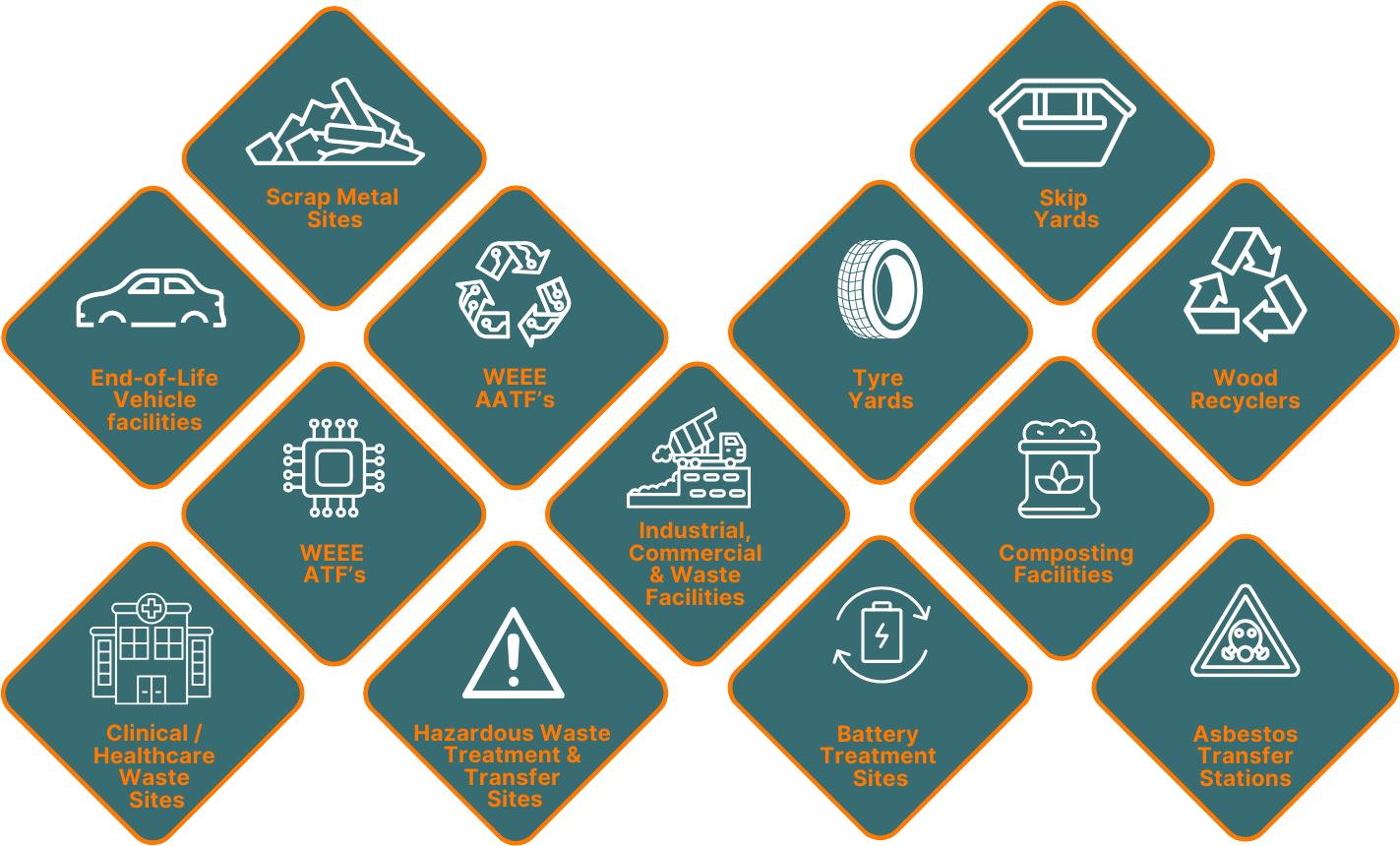
The Permitting Company have worked with many operators to create them a Fire Prevention Plant to help protect their sites from fires, and to satisfy the Environment Agency requirements.
Below are some of the different waste operations we have produced plans for:
Don’t just take our word for it, check out testimonials from our valued customers!
Services
The Permitting Company have a 100% success rate in getting Fire Prevention Plans Approved by the regulator.
All we need is your time in explaining your activity and we will take care of the rest. If your site is in need of a Fire Prevention Plan, look no further.
FPP’s come in many shapes and sizes and the controls required by the Environment Agency are not prescriptive, meaning that its not a case of implementing expensive controls to satisfy their requirements.
We always work with our clients in advising the most suitable measures to implement which takes cost into account as one of the biggest factors.
Fees
The Permitting Company are one of the most competitively priced permitting consultancies in United Kingdom.
Because every site and FPP is unique, there are no standard prices when it comes to developing these systems.
Please contact us for a no obligation discussion.
Why work with us?
At The Permitting Company we are more that just consultants – we’re your partners in achieving compliant successful waste operations.
Here is why our clients chose us:

Regulator insight
With years of experience navigating complex environmental regulations, we ensure your application meets all permitting requirements efficiently and without unnecessary delays.

Specialist in the sector
As specialists in environmental permitting compliance, we bring the knowledge, experience and precision needed to help your project suceed from concept to completion.

Fast turnaround
We understand the importance of timescales. Our efficient processes and strong relationships with regulators help us deliver permitting solutions quickly without compromising quality.